Soaked in Hull: The First 30 Minutes That Decide Your Phone's Fate
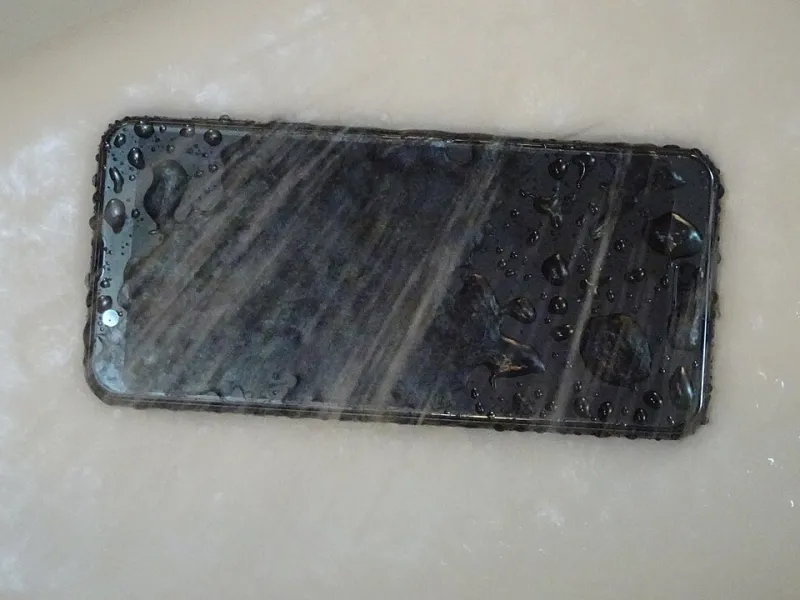
Photo: RuinDig/Yuki Uchida, CC BY 4.0, via Wikimedia Commons
You're walking down Whitefriargate, the sky opens, and your phone takes a direct hit. Or it has been in a coat pocket all afternoon and feels suspiciously damp. Either way, the next 30 minutes matter more than the next 30 hours. Hull weather has a knack for finding the one gap in your jacket, and 'water-resistant' is one of the most misunderstood phrases in tech.
What an IP rating actually promises
IP67, IP68, IPX8 — these codes look reassuring until you read the small print. The first digit is dust protection; the second is water. An IP68 phone has been tested in fresh water, usually at a set depth and for a set time in a lab. It has not been tested in Hull puddle water, salty air near the Humber, soapy bathwater, chlorine, coffee, or the gritty mix that collects in a bike lane.
More importantly, resistance fades. Seals age, cases trap moisture, and a previous repair can weaken the glue or gaskets. A phone that survived a splash in 2024 is not necessarily the same phone in 2026. Treat the rating as a bonus, not a promise.
The first 30 minutes: keep it boring
- Power it off properly. Not lock. Off. Water and electricity are a poor combination, and a phone that keeps trying to boot can turn a damp board into a corroded one.
- Dry the outside with a lint-free cloth or kitchen roll. Remove the case. If there is a port flap or a SIM tray seal, open it gently so air can get in — but do not poke anything into the port.
- Give it a gentle shake, not a ketchup-bottle shake. You are trying to move loose droplets away from openings, not rearrange the internals.
- Leave it in a dry, airy spot at room temperature. If you have silica gel packets from a shoe box, great. A clean, dry container with those packets is fine. Rice is not.
- Keep it switched off and do not charge it. Charging a wet phone is one of the quickest ways to cause a short or heat damage.
The things not to do
Do not put it on a radiator. Do not use a hairdryer. Do not wave it over a hob. Heat pushes moisture further inside and can warp seals or damage the battery. Do not blow into the charging port with your mouth — your breath is humid. Do not press every button repeatedly to 'check if it works'. Do not assume that because the screen comes on, the job is done. Corrosion can take days to show itself.
And please ignore the rice trick. Rice dust gets into ports and speakers, and it does not pull water out of a sealed phone. It just gives you something to clean out later.
When a local repair shop is worth the trip
If the phone fell into dirty water, salt water, a sugary drink, or a puddle with grit in it, get it looked at even if it seems fine. Fresh water is one thing; Hull street water is another. The same goes for any phone that has been repaired before, because the seals are already a question mark.
Book a diagnostic if you notice fog under the camera lens, a muffled speaker, a screen that flickers, a charging port that only works at an angle, or a phone that powers on but randomly restarts. A local repair counter can open it, clean corrosion, and tell you whether a repair is sensible. Ask them to back up the data first if the phone still powers on, and ask for a written quote before work starts.
A repair is often worth it when the data matters more than the handset. Photos, WhatsApp chats, and work messages are usually the real loss. If you are due an upgrade anyway, a soak can be the nudge — but do not let a shop pressure you into a board-level repair without a clear price and a clear diagnosis.
Prevention that actually works in Hull
A zip bag costs less than a screen protector and lives happily in a coat pocket. A case with port covers helps, but only if you actually close them. Avoid taking calls in a downpour with the phone pressed to your ear; use headphones or wait under the awning. Check your case for trapped moisture after a wet walk. And if you are heading out on the water or cycling through a proper downpour, a cheap dry bag is better than a brave face.
Most soaked phones do not die from the first drop. They die from a charger plugged in too soon, a radiator, or a false sense of security. Slow down for half an hour and you give the handset a real chance.